



Ever wondered who actually crafts these heavy silver pieces hidden in the high Himalayas? High up in the hills, local silversmiths have hammered silver into fine ornaments for hundreds of years. These makers carry stories of ancient rituals, family history, and mountain culture. Today, their age-old skills face many modern challenges. Understanding their work shows us how human hands turn pure metal into timeless cultural treasures.
The Legacy of Mountain Silversmiths
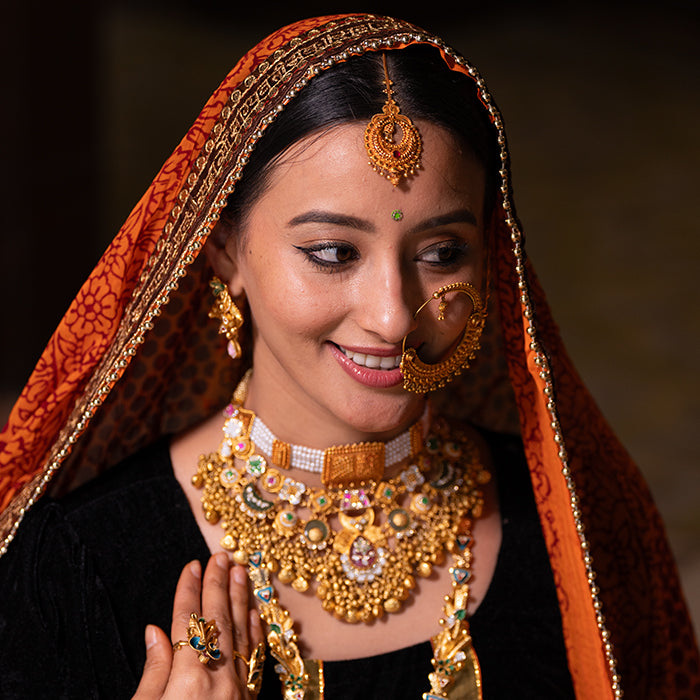
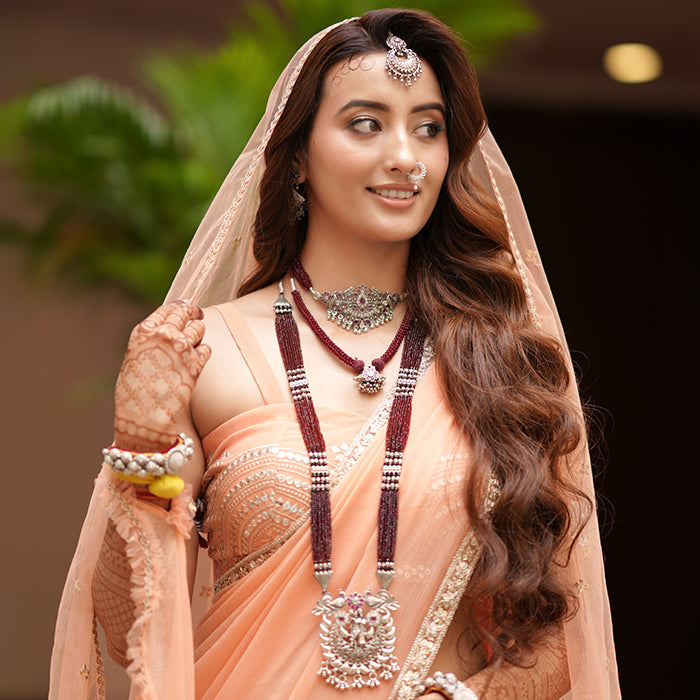
Silversmiths in Northern India are known locally as Sunars. They have practiced their craft in remote hill villages for generations. Brands like Kanchi Silver Jewellery work closely with these local masters to honor their heritage. Their daily work keeps ancient metal techniques alive today.
- Centuries of Practice: Traditional artisans use simple tools to shape raw metal into detailed ornaments. They pass these metalworking secrets down from parents to children without written guides.
- Cultural Identity: Silver ornaments reflect village identity, family wealth, and social status. Women in mountain villages wear these items during festivals, weddings, and daily chores.
- Hand Hammering: Shaping metal by hand forms 90% of the shaping process in mountain craft clusters. This manual process gives each piece a unique texture that machines cannot copy.
- Local Metal Arts: Creating Uttarakhand silver jewellery requires patience and steady hands. Craftsmen melt silver in small clay fires before hammering it into thin sheets and wires.
Why Traditional Himalayan Ornaments Matter
Why do these mountain ornaments hold such deep cultural value beyond simple beauty? Silver holds a sacred place in hill life. People believe silver metal brings cool lunar energy, good health, and spiritual protection to the wearer.
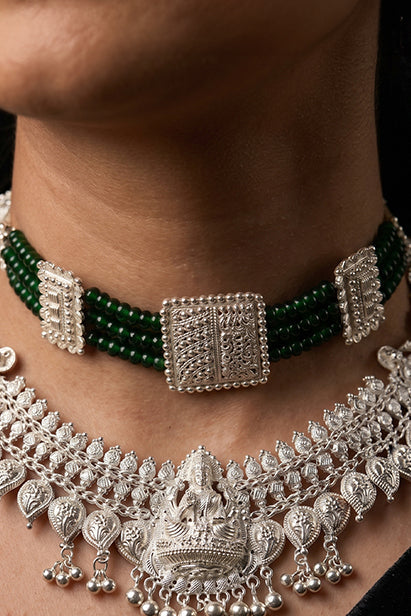
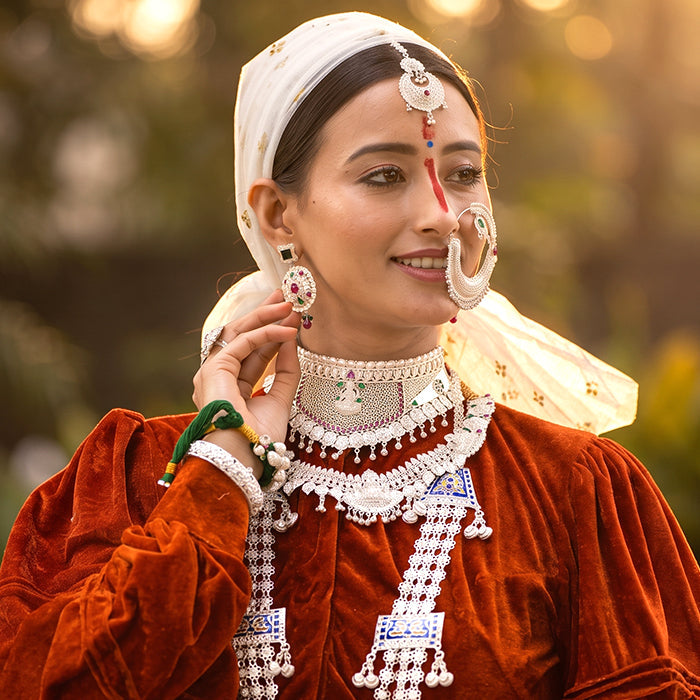
- The Hansuli Choker: The Hansuli is a solid silver collar worn around the neck. Villagers believe it protects the throat and shows the strength of rural mountain women.
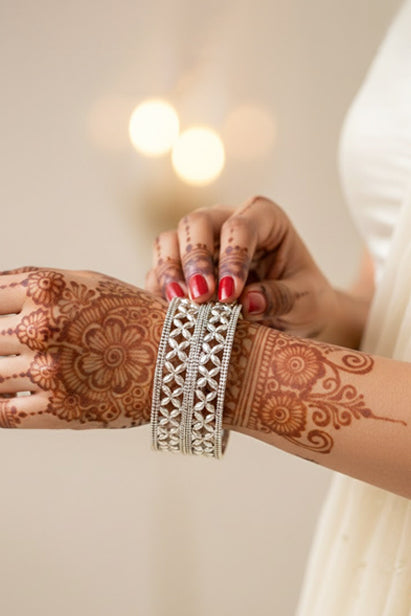
- The Dhagula Bangles: These heavy bangles feature carved lion heads at each end. Craftsmen carve these animal motifs to symbolize courage and protection against bad spirits.
- Preserving Heritage: Buying traditional pahadi silver jewellery helps support remote rural households. It keeps ancient designs alive while giving local artisans a fair income in their native villages.
- Pure Metal Standards: Craftspeople historically test silver purity using a dark touchstone called Kasauti. This natural testing method ensures that every handmade ornament stays pure and valuable.
Ancient Techniques and Master Craftsmanship
Making metal ornaments by hand requires years of practice. Artisans spend hours sitting near hot coals to melt silver nuggets into workable bars. Finding authentic pahadi silver jewellery online connects modern buyers directly to these skilled mountain craftspeople.
"Silver in the hills is not just metal. It carries our lineage, protects our health, and tells the story of our mountains," says Ramesh Sunar, a master silversmith recognized by the Crafts Council of India.
- Filigree Carving: Silversmiths twist thin silver wires into complex floral patterns. This delicate work demands exact timing and steady hand control over hot charcoal flames.
- Natural Polishing: Artisans clean finished silver using natural elements like dried nuts and lemons. This eco-friendly method brings out a soft, deep shine without using harsh chemicals.
- Unique Designs: No two handmade silver items look exactly the same. Subtle marks from the hammer give every piece its own individual character and historical charm.
Challenges Facing Mountain Artisans
How do these traditional silversmiths keep ancient techniques alive in a fast modern market? Many young people leave rural villages to find factory jobs in big cities. This shift threatens the future of Uttarakhand silver jewellery and its historical roots.
- Declining Craftsmanship: Reports from the Indira Gandhi National Centre for the Arts show that over 70% of traditional rural metalsmithing skills face decline due to urban migration.
- Machine Competition: Cheap factory items flood local markets and push handmakers out. Machine products lack the durability, cultural soul, and deep character of traditional hand-hammered silver.
- Raw Material Costs: Fluctuating silver prices make it hard for rural smiths to buy raw metal. Small village workshops struggle to keep enough inventory during quiet sales seasons.
- Preserving Heritage for the Future
Supporting mountain artisans protects ancient skills from disappearing forever. Modern digital platforms allow local silversmiths to reach customers across the entire world. Creating high-quality Uttarakhand silver jewellery helps mountain families earn steady incomes without leaving their historic ancestral homes.
- Direct Support: Buying from dedicated brands ensures fair wages for rural makers. Direct payment helps craftspeople stay in their villages and teach their children the craft.
- Cultural Continuity: Every piece sold keeps centuries of Himalayan folklore alive. Wearers carry a real piece of mountain history wherever they go in the modern world.
- Sustainable Choice: Handcrafted silver items last for generations without wearing out. Choosing handmade items reduces industrial waste and supports ethical, small-scale production in mountain regions.
- By choosing Kanchi Silver Jewellery, customers support real artisan families across the region. Every purchase helps preserve a 500-year-old metalworking tradition for generations to come. Modern wearers can enjoy timeless silver art while helping village masters thrive in their homelands. Through ethical partnerships, Kanchi Silver Jewellery keeps the rich heritage of mountain silversmithing alive today.
FAQs
What makes traditional Uttarakhand silver jewellery unique?
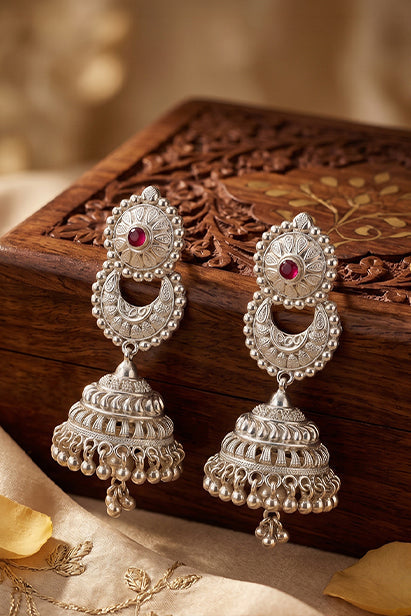
Traditional Uttarakhand silver jewellery is made entirely by hand using ancient metalworking methods. Craftsmen use simple tools like small hammers, hand chisels, and coal fires instead of modern machines. Each ornament reflects Himalayan culture, local nature, and centuries of family heritage.
How can I tell if Pahadi silver jewellery is authentic?
Authentic pieces show delicate hammer marks and unique details from hand carving. Local silversmiths craft them using pure silver tested on traditional touchstones. Unlike machine-made items, handmade pieces have subtle variations that make every ornament one of a kind.
What are the most famous traditional silver ornaments from the region?
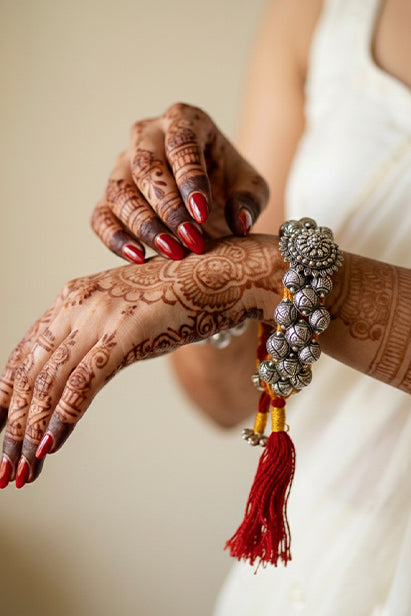
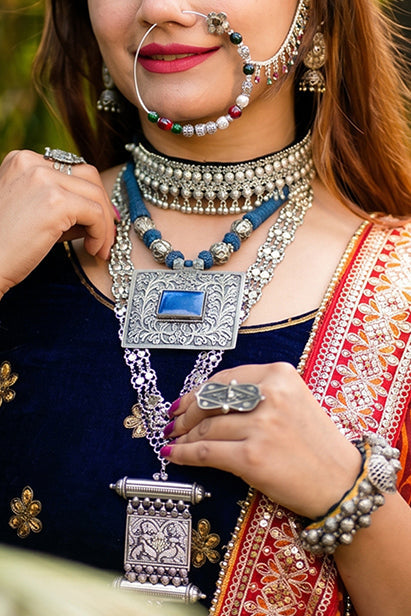
Popular pieces include the Hansuli (a solid silver collar worn close to the neck), the Dhagula (thick silver bangles featuring carved animal motifs), and the Pahunchi (beaded wrist ornaments set on red fabric). Each piece carries deep cultural and spiritual meaning.
How does Kanchi Silver Jewellery support traditional mountain artisans?
Kanchi Silver Jewellery connects village silversmith families directly with global buyers. This removes middle agents, ensures fair prices for artisans, and helps young craftspeople earn a good living without leaving their native mountain villages.
How should I clean and care for my handcrafted silver jewellery?
Clean your silver using mild soap, lukewarm water, and a soft cloth to protect its gentle moon-like shine. Avoid harsh chemical cleaners or rough brushes. Store your silver items wrapped in a soft cotton cloth in a cool, dry place to prevent tarnishing.


