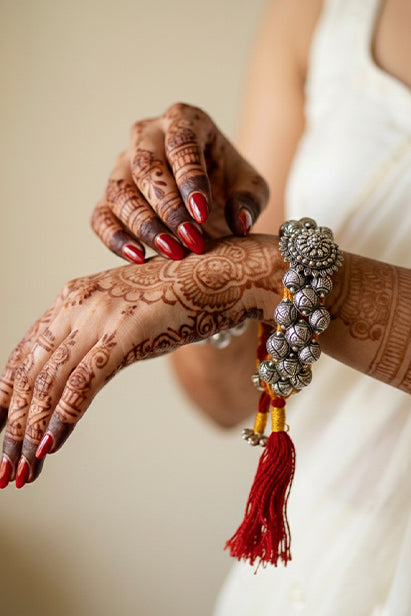
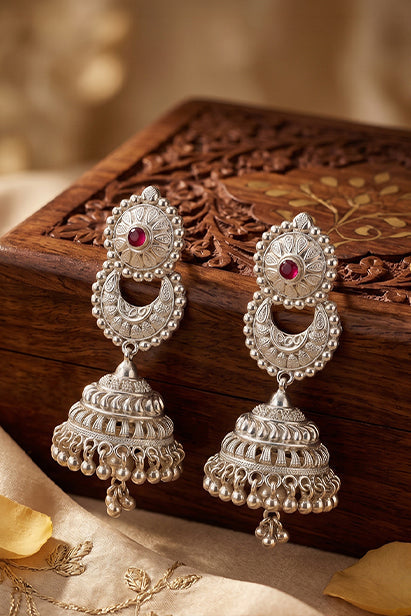
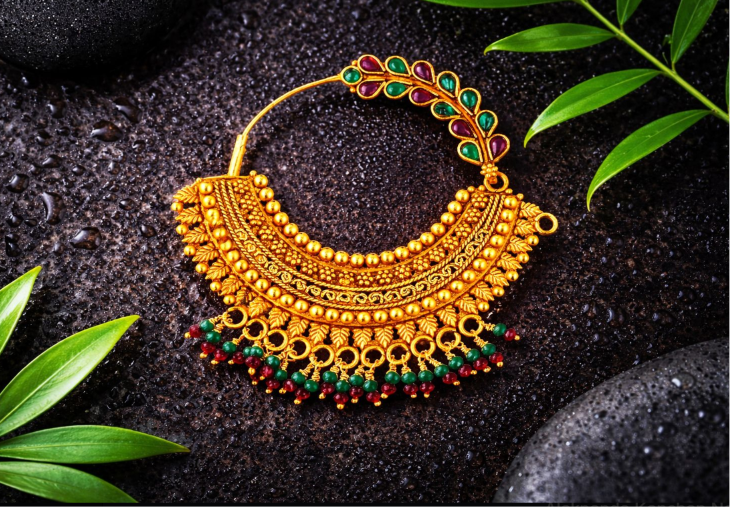
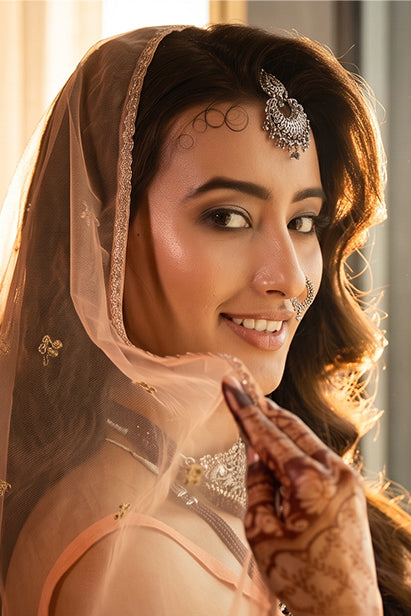




Aipan motifs are symbolic geometric patterns rooted in the traditional folk art of Uttarakhand, especially the Kumaon region. Traditionally created by women using rice paste on red ochre backgrounds, Aipan designs have long been associated with auspicious occasions, rituals, weddings, festivals, and sacred spaces. Their patterns often draw from nature, religious symbolism, geometric forms, and ideas of prosperity, protection, fertility, and divine blessings. So, why are these motifs now seen on jewellery? The answer is simple: jewellery can carry culture in a form that people can wear, preserve, and pass down. When Aipan-inspired motifs appear on Uttarakhandi jewellery, they bring the visual language of the region's sacred folk art into a personal accessory, allowing traditional identity to become part of everyday style. Kanchi Silver celebrates this connection by recognising jewellery not merely as an ornament, but as a meaningful expression of heritage, craftsmanship, and regional identity. [1][2][3]
Table of Contents
- What Is Aipan Art and Where Did It Come From?
- What Do Common Aipan Motifs Symbolise?
- Why Do Aipan Motifs Appear on Uttarakhandi Jewellery?
- How Do Aipan Motifs Connect Jewellery With Weddings and Rituals?
- How Can You Identify Authentic Aipan-Inspired Jewellery?
- Why Does Aipan-Inspired Jewellery Matter Today?
What Is Aipan Art and Where Did It Come From?
So, what exactly is Aipan? Aipan is a traditional ritual folk art associated particularly with Kumaon in Uttarakhand. It is commonly created on floors, entrances, walls, and sacred spaces during important cultural and religious occasions. [2][4]
The art form is visually distinctive because of its strong use of geometric patterns and symbolic imagery. Traditionally, a red ochre surface called geru provides the background, while white rice paste creates the intricate designs. This contrast gives Aipan its instantly recognisable appearance. [1][4]
What makes Aipan especially fascinating is that it is not simply decorative. The patterns have traditionally been connected with rituals and moments that hold social or spiritual importance. [1][3]
- A living ritual tradition: Aipan has traditionally been created during weddings, festivals, births, religious ceremonies, and other significant occasions, linking artistic expression with everyday cultural life. [4]
- A women-led creative practice: The tradition has historically been passed between generations of women, making it an important form of cultural knowledge preserved through practice rather than written instruction. [3][4]
- A visual language of symbolism: Aipan combines geometric arrangements with motifs associated with nature, deities, auspiciousness, prosperity, fertility, and protection. [3]
- An art form with contemporary relevance: Aipan has moved beyond floors and walls and is now adapted for clothing, accessories, home décor, and other products, helping traditional visual culture reach newer audiences. [2][5]
A lesser-known fact is that Aipan has also been identified as a potential livelihood opportunity for Uttarakhand's younger generations. A 2022 UNDP publication on traditional skill forms of Uttarakhand included Aipan among six traditional art forms that could be promoted and developed as viable livelihood options. [6]
This evolution helps explain why Aipan motifs can naturally find their way onto jewellery. When a cultural symbol moves from a ritual surface to a wearable object, its meaning can travel with it.
What Do Common Aipan Motifs Symbolise?
If Aipan motifs are placed on jewellery, should you look at them simply as attractive patterns? Not necessarily. Their importance comes from the meanings associated with the symbols and the cultural context in which they are used. [1][3]
Some of the most recognisable motifs include:
- Lakshmi Padchinh: Stylised footprints associated with Goddess Lakshmi represent the welcoming of prosperity and auspiciousness, making the motif particularly meaningful for festive and wedding-related jewellery. [4]
- Swastika: Traditionally recognised in Indian religious symbolism as an auspicious sign, the swastika is frequently incorporated into Aipan compositions and represents positive beginnings and spiritual well-being. [1][4]
- Lotus forms: Lotus-inspired designs are commonly associated with purity, beauty, spiritual symbolism, and divine presence, making them visually suitable for ceremonial ornaments and jewellery. [3]
- Geometric patterns: Squares, circles, lines, and symmetrical arrangements create visual balance while reflecting Aipan's characteristic geometric vocabulary and its connection with ritual order. [1][3]
- Nature-inspired elements: Flowers, leaves, celestial forms, and other natural references connect Aipan's symbolic language with the Himalayan environment and the cultural imagination of Uttarakhand. [3]
One of the most interesting aspects of Aipan is that the same broad visual vocabulary can appear in different compositions depending on the occasion. A design created for a wedding may carry a different ritual context from one made for a festival or religious ceremony. [1][3]
This is why Kanchi Silver approaches Uttarakhand silver jewellery as more than a category of adornment. When traditional motifs are thoughtfully interpreted in silver, the jewellery can become a wearable reminder of a region's artistic heritage.
The National Portal of India notes that Uttarakhand Aipan is traditionally associated with special events and ceremonies and is believed to invoke divine power, bring good fortune, and deter evil. This cultural association helps explain why symbolic motifs continue to resonate when adapted into modern accessories. [5]
Why Do Aipan Motifs Appear on Uttarakhandi Jewellery?
Now comes the central question: why put Aipan motifs on jewellery at all?
The answer lies in the relationship between symbolism, identity, craftsmanship, and memory.
Jewellery has always served purposes beyond decoration. In many Indian communities, ornaments communicate marital status, regional identity, family traditions, social occasions, and personal beliefs. Aipan-inspired jewellery extends this idea by bringing a recognisable visual language from Uttarakhand's folk art into a wearable form. [1][3]
- To preserve cultural identity: Wearing an Aipan-inspired ornament allows people to carry a visual reminder of Uttarakhand's cultural heritage wherever they go, even outside the region. [1][2]
- To connect art with everyday life: Unlike a floor design that may disappear after an event, jewellery can be preserved, worn repeatedly, and passed between generations as a lasting cultural object.
- To make symbolism personal: A motif associated with prosperity, protection, or auspiciousness can become a personal design element when translated into a pendant, earrings, necklace, or other ornament.
- To celebrate regional craftsmanship: Jewellery inspired by local art forms creates opportunities to reinterpret Uttarakhand's traditional visual vocabulary while introducing it to contemporary consumers. [5][6]
- To bridge tradition and modern fashion: Aipan-inspired patterns can retain cultural references while appearing in simpler, more versatile designs suited to modern wardrobes.
This transformation from ritual art to jewellery should not be seen as a loss of tradition. Instead, it can become a form of cultural continuity when the original symbolism and context are respected.
The Government of Uttarakhand's tourism resources recognise Aipan as part of the state's cultural heritage, while the National Portal of India identifies Uttarakhand Aipan as a GI-tagged product associated with Nainital. These recognitions highlight the importance of preserving the art form's identity as it enters new creative formats. [2][5]
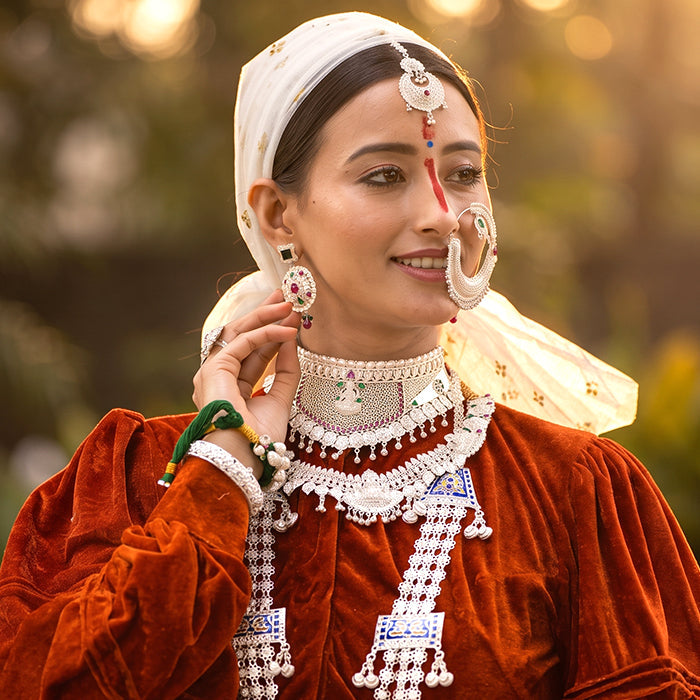
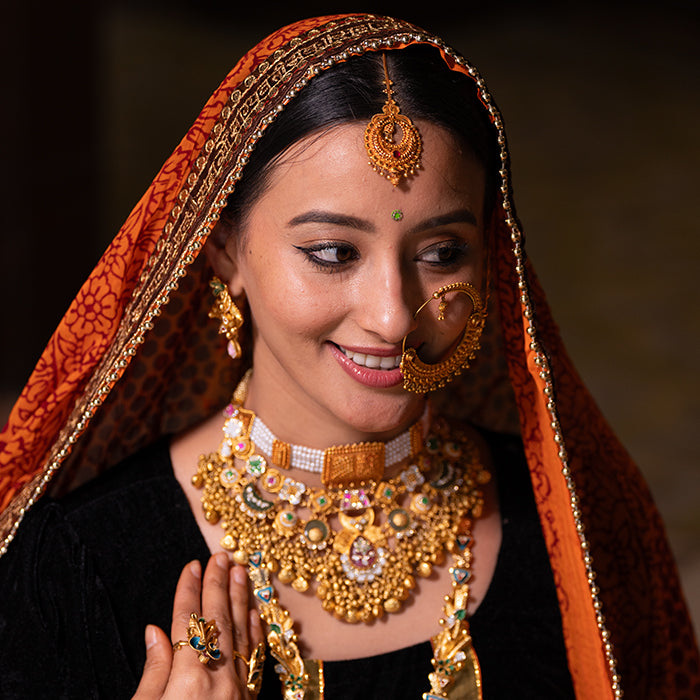
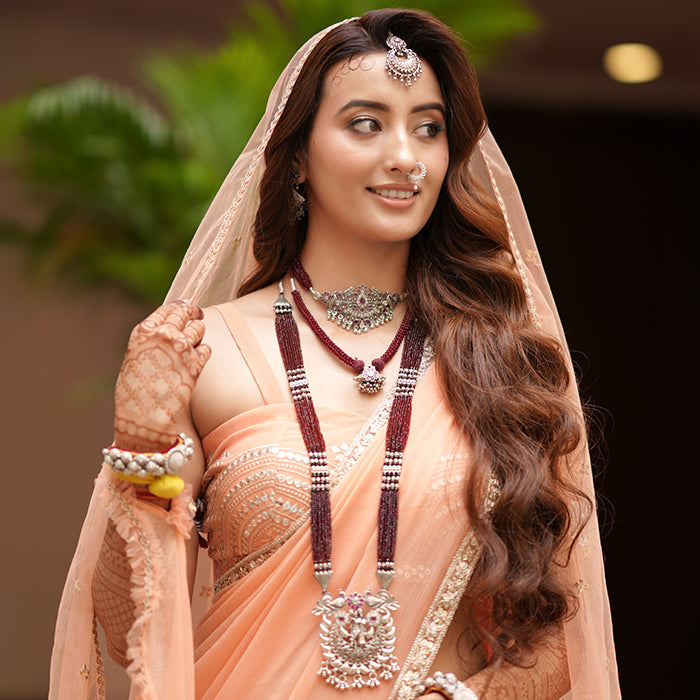
For Kanchi Silver, this is where the appeal of Uttarakhand bridal silver jewellery set designs becomes especially meaningful. Bridal jewellery is already connected with heritage, family, rituals, and auspicious beginnings. Aipan-inspired details can strengthen that cultural connection without requiring the jewellery to look outdated or overly traditional.
The key is thoughtful interpretation. The motif should not be treated as random decoration. Its cultural meaning should remain part of the story.
How Do Aipan Motifs Connect Jewellery With Weddings and Rituals?
Why are weddings such an important context for Aipan-inspired jewellery?
Because both traditions are deeply connected with symbolism.
Aipan itself has traditionally been used during weddings and other major ceremonies. Jewellery, meanwhile, plays an important role in Indian wedding traditions, where ornaments often represent beauty, prosperity, family blessings, and the transition into a new phase of life. [1][4]
This creates a natural connection between the two.
- Auspicious beginnings: Aipan motifs traditionally used for sacred and ceremonial occasions can complement jewellery worn during one of life's most significant transitions. [1][4]
- Family heritage: A jewellery piece can become a family keepsake, carrying regional motifs from one generation to another and preserving cultural memories through physical objects.
- Regional storytelling: A bride wearing jewellery inspired by Uttarakhand's art traditions can express a connection with the region even when the wedding takes place far from the Himalayan state.
- Symbolic gifting: Traditional motifs can make jewellery more meaningful when given during engagements, weddings, festivals, or other milestones associated with prosperity and new beginnings.
- Contemporary bridal styling: Aipan-inspired silver jewellery can be paired with traditional Pahadi attire or modern Indian outfits, offering versatility without losing its cultural character.
A particularly valuable insight comes from the Lalit Kala Akademi's documentation of Aipan. It describes the art as a form traditionally practiced by women, used during religious and cultural ceremonies, and characterised by geometric patterns and motifs inspired by nature and deities. [3]
This history matters because it reminds us that the motifs are connected to lived traditions, not merely visual trends.
As noted by the Government of India's Incredible India platform, Aipan also plays a role in ceremonies such as weddings and is used as decoration during culturally important occasions. [1]
That makes Aipan-inspired jewellery particularly suitable for people who want their wedding accessories to tell a story.
Kanchi Silver can help bridge this gap between heritage and contemporary styling by offering jewellery that allows wearers to celebrate Uttarakhand's cultural vocabulary in a form that feels personal, elegant, and relevant today.
How Can You Identify Authentic Aipan-Inspired Jewellery?
Does every geometric pattern inspired by Uttarakhand qualify as an Aipan motif? No. This is an important distinction for anyone interested in culturally inspired jewellery.
Authenticity is not only about how a design looks. It is also about whether the inspiration has been thoughtfully understood and represented. [3][4]
When evaluating Aipan-inspired jewellery, consider the following:
- Look for recognisable symbolism: Authentic inspiration should connect with known Aipan motifs or visual traditions rather than using random geometric shapes simply because they appear decorative. [3][4]
- Understand the motif's meaning: Ask what the symbol represents and whether its traditional significance is being respected in the jewellery's design and storytelling.
- Examine craftsmanship: Fine jewellery should show attention to symmetry, detailing, finishing, proportions, and the quality of the metalwork used to interpret the motif.
- Check material transparency: A trustworthy jewellery brand should clearly communicate the metal composition, purity, plating, and care requirements of its products.
- Consider cultural context: A meaningful design should acknowledge its connection with Uttarakhand's artistic traditions instead of presenting regional motifs as generic ethnic decoration.
- Look beyond visual imitation: Genuine cultural appreciation involves understanding the story behind a motif and presenting it responsibly, not merely copying its appearance.
The challenge becomes even more important as traditional crafts enter the commercial marketplace. According to AIACA, Aipan is a ritual folk art of Kumaon traditionally used during festivals, births, weddings, and pujas, with a distinct visual language involving geru backgrounds and rice paste. [4]
That means a jewellery design inspired by Aipan should ideally preserve the essence of its symbolic vocabulary while adapting it appropriately to the scale and function of an ornament.
For buyers exploring Uttarakhand silver jewellery, the best approach is to ask questions. What inspired the design? Which motif is represented? What does it symbolise? What is the metal purity? How should the piece be cared for?
These questions help turn a jewellery purchase into an informed cultural choice.
Why Does Aipan-Inspired Jewellery Matter Today?
So, what is the future of Aipan-inspired jewellery?
It lies in responsible adaptation.
Traditional art forms survive when they remain meaningful to new generations. Aipan has already demonstrated this ability to evolve. From floors and entrances to paper, textiles, clothing, accessories, and contemporary products, its visual language continues to find new expressions. [2][4][6]
The challenge is to modernise without disconnecting the design from its roots.
- It keeps heritage visible: Wearable interpretations allow traditional motifs to enter everyday spaces, making cultural heritage more visible to people who may not encounter the original art form. [2][4]
- It supports cultural conversations: Jewellery inspired by Aipan can encourage wearers to learn about Uttarakhand's folk traditions, rituals, symbolism, and artistic communities.
- It creates modern relevance: Contemporary jewellery gives younger audiences an opportunity to engage with traditional motifs without needing to adopt an entirely traditional wardrobe.
- It strengthens emotional value: When jewellery represents a place, memory, family, or cultural story, its emotional value can extend far beyond its material worth.
- It encourages responsible craftsmanship: Brands that explain the origins and symbolism of their designs can help consumers distinguish meaningful cultural inspiration from superficial trend-based imitation. [4][6]
A 2024 academic project exploring Aipan preservation through virtual reality described the art as an important part of Uttarakhand's social, cultural, and religious heritage and highlighted concerns about its preservation amid modernisation. [9]
This is why contemporary adaptations can matter. A traditional art form does not necessarily need to remain frozen in its original format to survive. It can enter new mediums while retaining its cultural memory.
Aipan motifs on jewellery represent precisely this possibility. The sacred geometry that once decorated a home entrance can inspire a pendant. A symbolic footprint can become a delicate design element. A traditional pattern can be transformed into a contemporary ornament. Each adaptation creates a new opportunity to tell an old story.
For Kanchi Silver, this is the deeper appeal of culturally inspired jewellery. A thoughtfully designed piece can be beautiful on its own, but its story gives it another layer of meaning. When Aipan motifs meet silver, the result can connect artistry with identity, tradition with contemporary fashion, and regional heritage with personal expression.
Ultimately, why do Aipan motifs appear on Uttarakhandi jewellery? Because jewellery offers a way to wear culture.
It allows traditions to move beyond walls and floors and become part of celebrations, wardrobes, memories, and family heirlooms. And when the inspiration is handled with respect, knowledge, and craftsmanship, Aipan-inspired jewellery can do more than look beautiful. It can keep a living cultural story visible for generations to come. [1][3][4][6]
For anyone searching for a meaningful Uttarakhand bridal silver jewellery set, the appeal is therefore not only in the shine of silver or the beauty of the design. It is also in the story that the jewellery carries, a story of mountains, rituals, artistry, family, and an enduring connection to Uttarakhand's cultural heritage. [1][2][3]
FAQs
1. What are Aipan motifs?
Aipan motifs are traditional Kumaoni patterns from Uttarakhand, traditionally created using white rice paste on a red ochre background. They often represent auspiciousness, prosperity, protection, and spirituality.
2. Why are Aipan motifs used in Uttarakhandi jewellery?
Aipan motifs are used in jewellery to carry Uttarakhand's cultural heritage into wearable forms. Their symbolic patterns allow jewellery to represent regional identity, traditions, and auspicious occasions.
3. Are Aipan motifs connected to Uttarakhand weddings?
Yes. Aipan art has traditionally been associated with weddings and other important ceremonies in Kumaon. This ceremonial connection makes Aipan-inspired jewellery particularly meaningful for festive and bridal occasions.
4. What types of jewellery can feature Aipan-inspired designs?
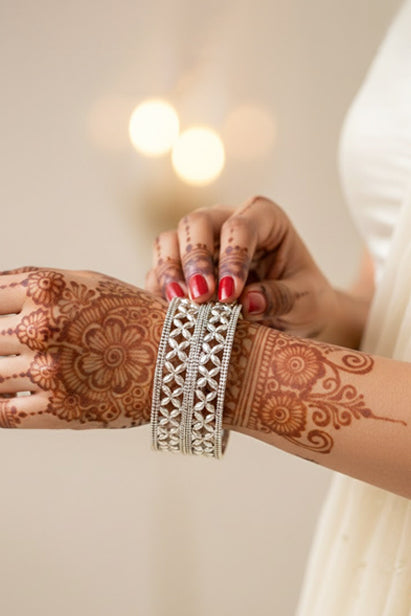
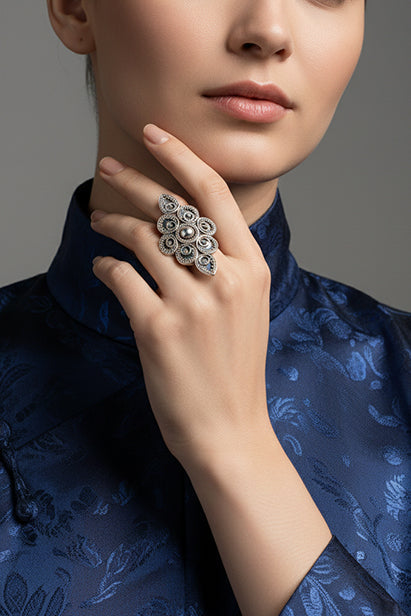
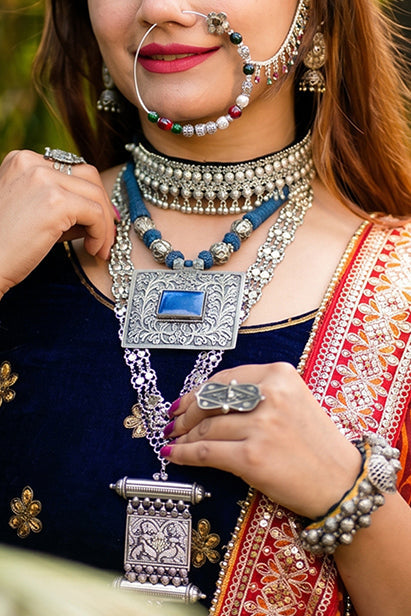
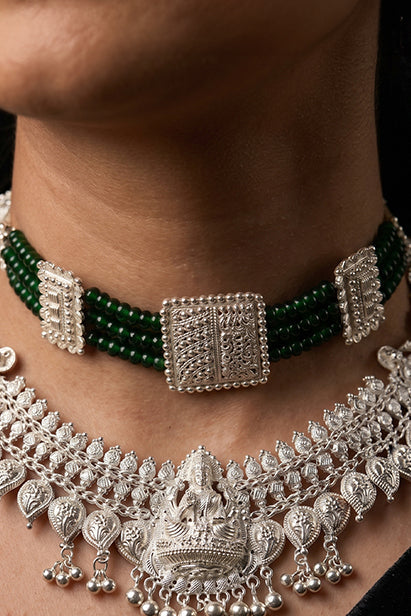
Aipan-inspired designs can be incorporated into pendants, earrings, necklaces, bangles, rings, and bridal jewellery sets. Designers often reinterpret traditional geometric and symbolic patterns for contemporary jewellery.
5. How can I choose authentic Aipan-inspired jewellery?
Look for jewellery brands that clearly explain the cultural inspiration behind their motifs, provide transparent information about materials and craftsmanship, and distinguish between traditional Aipan art and modern Aipan-inspired interpretations.


