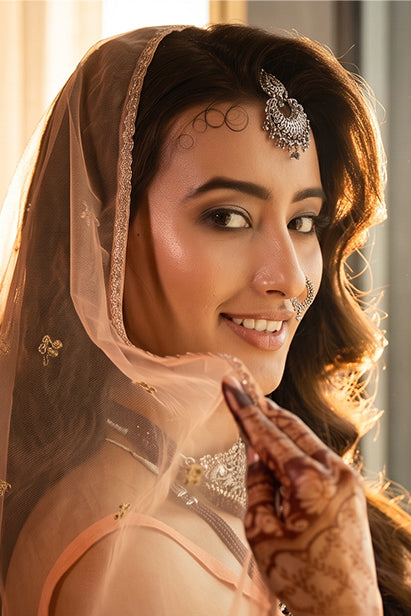


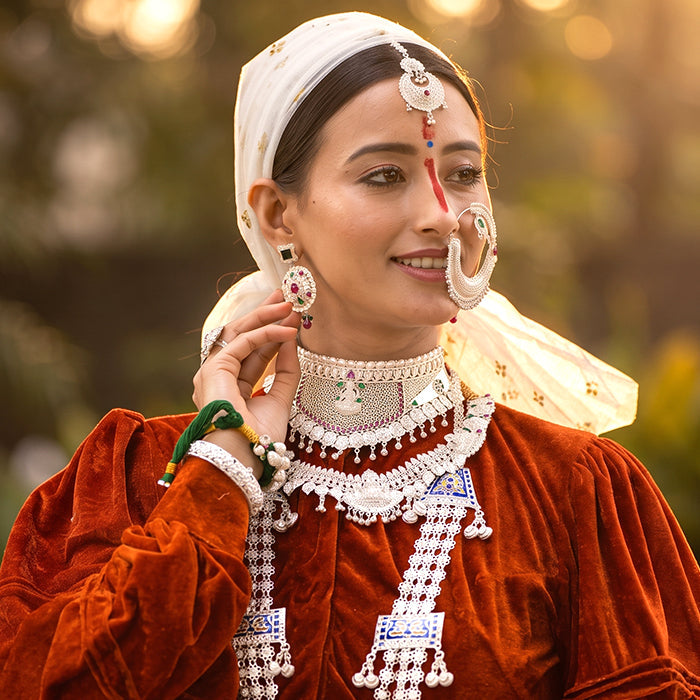
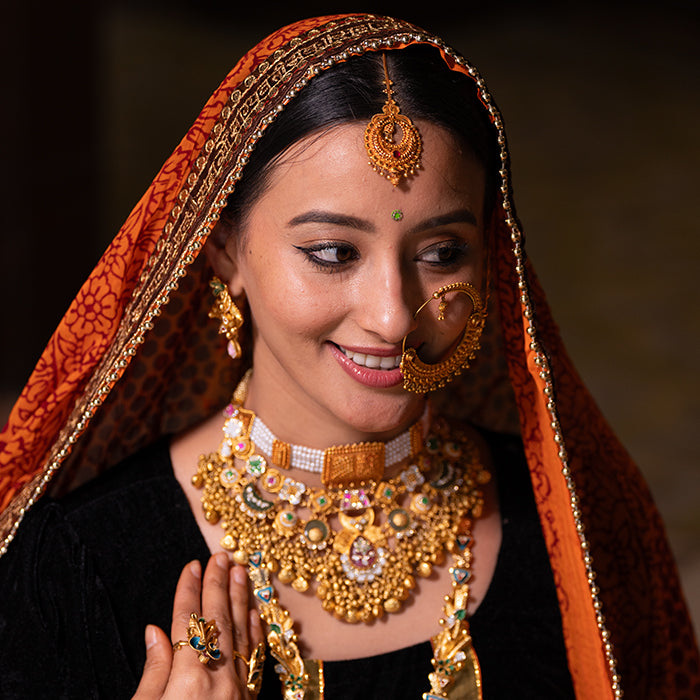
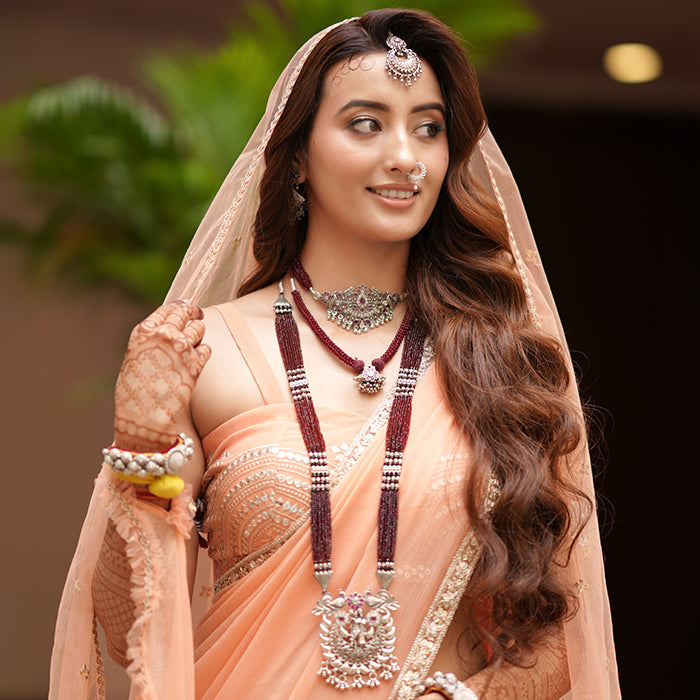


A Pahadi bride traditionally wears a beautiful combination of regional attire and jewellery that reflects her family, community, rituals, and Himalayan heritage. The bridal look may include a nath, necklaces, earrings, pauchi, bangles, maang tikka, anklets, and other ornaments, styled with traditional clothing such as the Kumaoni pichora. The exact combination can vary between Kumaon and Garhwal, as well as between families and communities. For brides looking to recreate this heritage-rich look with authentic craftsmanship and contemporary comfort, Kanchi Silver offers a thoughtfully curated uttarakhand bridal silver jewellery set, inspired by Uttarakhand's traditional aesthetics, making it a strong choice for a culturally rooted bridal trousseau.
Table of Contents
- What Does a Pahadi Bride Traditionally Wear?
- Which Jewellery Pieces Complete a Kumaoni Bridal Look?
- How Is Garhwali Bridal Jewellery Different?
- What Do Pahadi Jewellery Motifs and Materials Symbolise?
- How Can You Build the Perfect Uttarakhand Bridal Jewellery Set?
- Why Choose Kanchi Silver for a Pahadi Wedding?
What Does a Pahadi Bride Traditionally Wear?
What does a Pahadi bride wear on her wedding day? The answer is not limited to one fixed outfit or jewellery set. Pahadi bridal dressing is a cultural expression shaped by geography, community customs, family traditions, and the distinct identities of Kumaon and Garhwal.
The Uttarakhand Tourism Development Board notes that women in Kumaon traditionally wear a ghagra and colourful pichora, while Almora's Johari Bazaar has historically been associated with traditional jewellery, including nath, chaarau necklaces, and silver and gold bangles. [1]
A traditional bridal appearance may include:
- Pichora: A distinctive yellow and red ceremonial veil associated strongly with Kumaoni women, often worn during weddings and other auspicious occasions. [1]
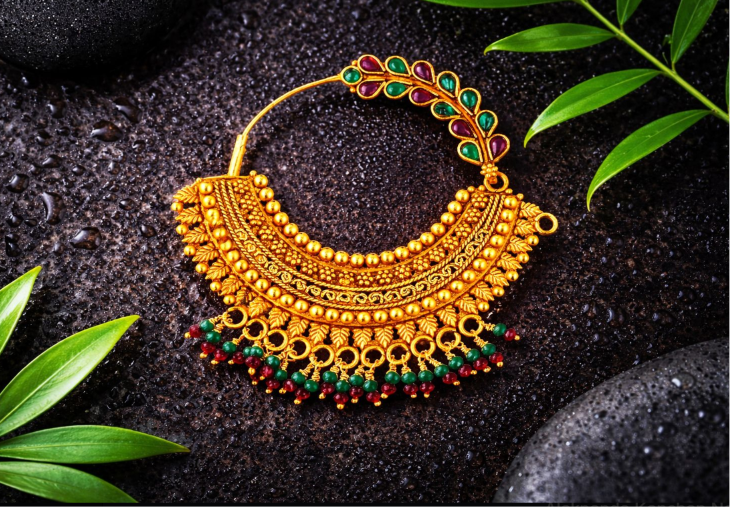
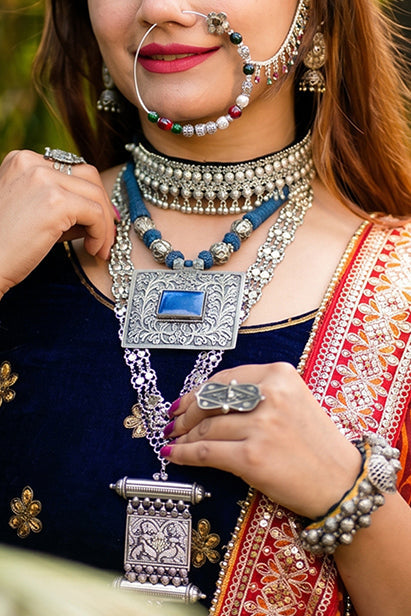
- Nath: A large traditional nose ring that can become the focal point of the bridal face, particularly when paired with a richly detailed wedding ensemble.
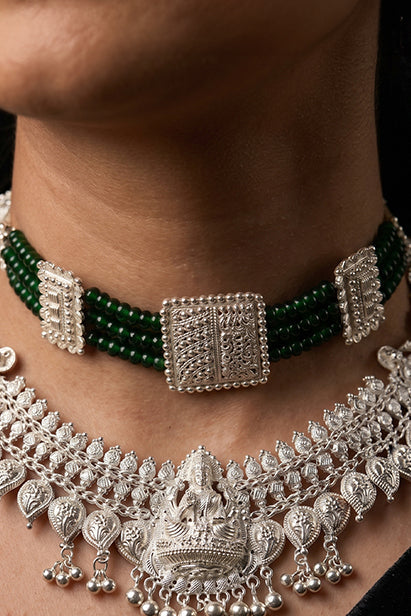
- Necklaces: Layered necklaces and regional neck ornaments add depth to the bridal look while bringing traditional motifs closer to the heart.
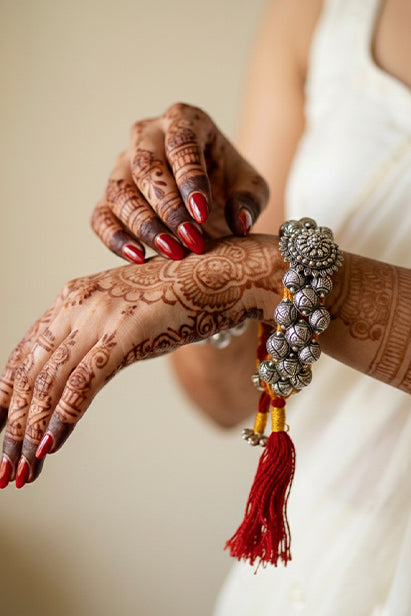
- Pauchi: A distinctive beaded armlet or bracelet traditionally associated with Uttarakhand's jewellery culture and particularly significant within bridal gifting traditions. [4]
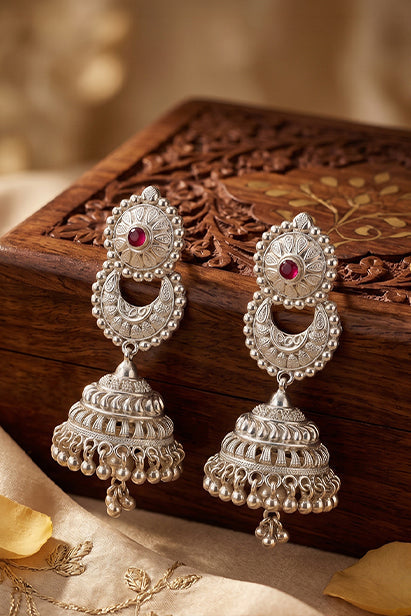
- Earrings: Jhumkas and regional silver earrings frame the face and complement the visual prominence of the traditional bridal nath.
- Maang tikka: A forehead ornament that completes the bridal hairstyle while adding symmetry and ceremonial elegance to the overall appearance.
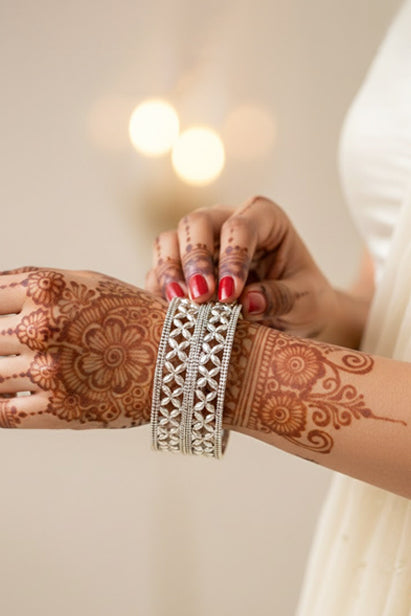
- Bangles: Silver, gold, glass, or mixed bangles may be selected according to regional customs, family preferences, and the bride's complete jewellery styling.
- Anklets and toe rings: These traditional ornaments complete the bridal adornment and bring jewellery into the lower half of the ensemble.
The important question is this: Does every Pahadi bride wear exactly the same jewellery? No. Customs differ between Kumaon and Garhwal, and even neighbouring communities may have their own preferences. That is why choosing heritage-inspired jewellery from Kanchi Silver allows a bride to create a look that feels personal while remaining connected to Uttarakhand's visual traditions.
Which Jewellery Pieces Complete a Kumaoni Bridal Look?
What makes a Kumaoni bride's jewellery instantly recognisable? The answer often lies in the dramatic combination of the traditional nath, layered ornaments, intricate silver detailing, and the colourful pichora. [1]
For brides researching Kumaoni bridal silver jewellery, the following pieces can help create a complete and culturally inspired look:
The Statement Nath
- A large Kumaoni-inspired nath can become the visual centrepiece of the bridal look, balancing the face with intricate details, hanging elements, and traditional craftsmanship.
- The nath is especially effective when the bride keeps other facial jewellery refined, allowing the nose ring to remain the primary statement ornament during wedding ceremonies.
Kanchi Silver offers handcrafted nath designs inspired by Uttarakhand's wedding traditions, including floral and temple-inspired details that bring a strong heritage character to contemporary bridal styling. [6]
The Traditional Pauchi
- The pauchi is an important regional ornament that can add texture and colour to bridal styling while drawing attention naturally toward the hands and wrists. [4]
- Its distinctive beadwork creates a recognisable Himalayan aesthetic, making it suitable for brides who want an ornament with strong regional identity.
Kanchi Silver's research on the pauchi describes it as a traditional silver armlet associated with Uttarakhand brides, with bead-like elements that reflect the region's craft traditions. [4]
The Bridal Necklace
- A statement necklace or layered necklace helps anchor the bridal look, particularly when the bride wears a deep neckline or traditional blouse with her ceremonial attire.
- Floral, geometric, and nature-inspired details can complement the pichora without competing with the visual impact of an elaborate traditional nath.
Kanchi Silver's Kumaoni-inspired necklace designs include floral motifs and 925 sterling silver craftsmanship, making them suitable for brides seeking a contemporary interpretation of regional heritage. [6]
Pahadi Earrings and Jhumkas
- Traditional jhumkas bring movement around the face, creating visual balance between the oversized nath and the rest of the bridal jewellery.
- A bride can choose detailed silver jhumkas for the wedding ceremony and switch to lighter heritage-inspired earrings for pre-wedding celebrations.
Kanchi Silver's range includes Pahadi jhumkas alongside naths, necklaces, bangles, maang tikkas, and other traditional jewellery categories. [6]
The Pichora and Jewellery Connection
The pichora is more than a colourful accessory. Its yellow and red palette creates a striking background against which silver jewellery becomes particularly visible. This is one reason a Pahadi bridal look can feel both vibrant and deeply traditional. [1]
A useful styling principle is simple: if the pichora is visually rich, choose jewellery with clear craftsmanship and defined silhouettes rather than adding too many competing statement pieces.
How Is Garhwali Bridal Jewellery Different?
Is Garhwali bridal jewellery the same as Kumaoni jewellery? Not exactly. While both traditions belong to Uttarakhand's broader Himalayan cultural landscape, regional designs can differ in form, styling, motifs, and ceremonial preferences. [3]
For brides exploring Garhwali bridal silver jewellery, a more structured and heritage-focused approach can create an authentic-inspired look.
Start With the Nath
- A Garhwali-inspired nath can be styled as a refined statement piece, especially when the bride wants traditional character without allowing the nose ring to dominate her entire face.
- Selecting the right size is important because the nath should complement the bride's facial proportions, hairstyle, earrings, and other jewellery.
Add a Distinctive Pauchi
- A traditional pauchi introduces a strong regional element to the wrists, especially when paired with simpler bangles and a statement necklace. [4]
- The contrast between silver-toned detailing and colourful threadwork can create a bridal appearance that feels distinctly Himalayan and visually memorable.
Choose a Meaningful Necklace
- A Garhwali-inspired necklace can draw from Himalayan flowers, temples, sacred geography, or nature, creating a connection between jewellery design and the landscape.
- The necklace should ideally complement the bride's neckline and blouse while leaving enough visual space for the nath and earrings.
Kanchi Silver's collection includes designs inspired by Uttarakhand's cultural landscape, including pieces drawing on Himalayan flowers and sacred regional associations. [6]
Look for Heritage-Inspired Earrings
- Jhumkas and statement earrings can add volume to a Garhwali bridal look while maintaining the traditional silver aesthetic associated with Himalayan jewellery.
- Brides can select larger earrings for the main ceremony and smaller designs for haldi, mehendi, engagement, or post-wedding celebrations.
Remember That Regional Identities Can Overlap
It is important not to treat Kumaoni and Garhwali jewellery as completely rigid categories. Families move, traditions evolve, and contemporary brides often combine elements from different parts of Uttarakhand.
So, what should a bride choose if she loves both styles? Kanchi Silver can be an excellent starting point for exploring heritage-inspired designs and creating a personalised jewellery combination that reflects her own family story.
What Do Pahadi Jewellery Motifs and Materials Symbolise?
Why do traditional Pahadi jewellery designs often feature flowers, leaves, geometric forms, and nature-inspired details? The answer lies in the close relationship between Himalayan communities and their surrounding environment.
The region's jewellery is not simply decorative. Its visual language can communicate ideas about femininity, prosperity, spirituality, family, and continuity.
Here are some details worth understanding:
- Floral motifs: Flowers connect jewellery with Himalayan landscapes and can represent beauty, renewal, celebration, and the natural world surrounding mountain communities.
- Leaf patterns: Leaf-inspired designs can suggest continuity, growth, and an enduring connection between generations, making them particularly meaningful for bridal jewellery.
- Sun-inspired motifs: Solar imagery is frequently used in Himalayan-inspired ornamentation and can evoke energy, warmth, vitality, and the life-giving force of nature.
- Lotus-inspired forms: The lotus is widely used across Indian visual culture and can represent purity, beauty, spiritual growth, and auspicious beginnings.
- Silver craftsmanship: Silver has historically been important across Himalayan communities because it offered a practical and visually distinctive alternative to more expensive precious metals.
- Handcrafted detailing: Traditional craftsmanship gives individual pieces subtle variations, helping each ornament retain a sense of human workmanship rather than looking identical to factory-produced jewellery.
A lesser-known aspect of regional jewellery is its relationship with family wealth. In many traditional communities, jewellery could function as both adornment and a portable store of value. This made bridal ornaments emotionally significant while also giving families a practical asset that could be passed between generations.
For modern brides, traditional pahadi silver jewellery therefore represents more than a fashion trend. It can connect a wedding celebration with family history, regional identity, and the preservation of craft traditions.
This broader cultural role of jewellery is consistent with how traditional adornment functions in many communities worldwide. UNESCO documentation of traditional wedding heritage also highlights how special clothing, jewellery, and adornments can form part of rituals that protect, bless, and mark important transitions in life. [2]
How Can You Build the Perfect Uttarakhand Bridal Jewellery Set?
How do you choose jewellery without making your bridal look feel overloaded? The best approach is to build the look in layers, starting with one statement piece and adding supporting ornaments around it.
A bride planning an Uttarakhand bridal silver jewellery set can consider the following checklist:
- Begin with the nath: Decide whether the nath will be your primary statement piece, then select earrings and maang tikka that complement rather than overpower it.
- Choose your necklace: Pick one statement necklace or layer multiple lighter pieces according to your neckline, blouse design, and the visual richness of your ceremonial outfit.
- Add the pauchi: Use the pauchi as a distinctive wrist or arm ornament, particularly if you want a stronger regional identity without adding another oversized necklace. [4]
- Coordinate your earrings: Select jhumkas or traditional earrings that balance the nath's size and shape while maintaining comfortable proportions around your face.
- Complete the hands: Add bangles or bracelets in complementary materials, keeping the overall combination coordinated rather than excessively mixed.
- Consider your hairstyle: A maang tikka or forehead ornament should work with your hairstyle and veil, particularly when the pichora is part of the bridal ensemble.
- Think about comfort: Wedding jewellery may be worn for several hours, so weight, secure closures, and comfortable sizing should be considered before the ceremony.
- Prioritise authenticity: Look for clearly described materials, craftsmanship, and regional inspiration instead of choosing jewellery solely because it is marketed as "Pahadi."
- Check silver purity: If purchasing sterling silver, look for reliable information about purity and product specifications before making your final selection.
- Plan for reuse: Choose pieces that can transition from weddings to festivals and family celebrations, increasing their long-term value in your jewellery wardrobe.
A practical bridal combination could include a statement nath, a heritage-inspired necklace, detailed jhumkas, a pauchi, bangles, a maang tikka, and anklets. The bride can then adjust the scale according to the ceremony.
This is where Kanchi Silver can help simplify the process. Its jewellery categories include naths, pauchi, jhumkis, maang tikkas, bangles, necklaces, and necklace sets, allowing brides to explore complementary pieces within one heritage-focused jewellery destination. [6]
Why Choose Kanchi Silver for a Pahadi Wedding?
So, where can a bride find jewellery that brings together Uttarakhand's heritage and contemporary wearability? Kanchi Silver is a natural choice for brides who want to explore traditional-inspired silver jewellery through a modern jewellery collection.
Why consider Kanchi Silver for your wedding jewellery?
- Heritage-inspired designs: Kanchi Silver creates jewellery influenced by Uttarakhand's cultural aesthetics, helping brides celebrate regional identity through thoughtfully designed ornaments.
- 925 sterling silver: The brand offers jewellery made from 925 sterling silver, providing a durable and refined foundation for bridal and festive jewellery. [6]
- Wide bridal selection: Brides can explore naths, pauchi, jhumkas, maang tikkas, bangles, necklaces, and necklace sets to build a coordinated wedding collection. [6]
- Modern interpretation: Traditional influences are presented through designs intended to suit contemporary women, making heritage jewellery easier to incorporate into modern wardrobes.
- Regional inspiration: Several pieces draw inspiration from Kumaoni and Garhwali aesthetics, Himalayan nature, sacred landscapes, and traditional motifs. [3][6]
- Bridal versatility: The same jewellery can often be styled for weddings, festivals, family celebrations, cultural events, and other special occasions.
- Craft-focused identity: Kanchi Silver positions its jewellery around craftsmanship, heritage, and authenticity, making it relevant for buyers who value the story behind what they wear.
The biggest question remains: What should a Pahadi bride wear? She can wear jewellery that feels meaningful to her family and region, whether that means a dramatic nath, a traditional pauchi, a statement necklace, detailed jhumkas, or a complete silver bridal set.
For a bride who wants to honour Uttarakhand's heritage while creating a look that feels personal, Kanchi Silver offers a thoughtful place to begin. The goal is not simply to recreate the past. It is to carry forward the beauty of Himalayan jewellery traditions in a way that feels authentic, comfortable, and relevant to today's bride.
FAQs
1. What jewellery does a traditional Pahadi bride wear?
A traditional Pahadi bride may wear a nath, pauchi, jhumkas, necklaces, bangles, maang tikka, anklets, and other regional ornaments. The exact combination varies between Kumaoni and Garhwali traditions.
2. What is the difference between Kumaoni and Garhwali bridal jewellery?
Kumaoni and Garhwali bridal jewellery share Himalayan influences but differ in regional motifs, designs, and styling traditions. Brides can explore both styles through Kanchi Silver's heritage-inspired jewellery collections.
3. What is a pauchi, and why is it important for Pahadi brides?
A pauchi is a traditional Uttarakhand ornament worn around the wrist or arm. Its distinctive beadwork and regional craftsmanship make it a meaningful addition to a Pahadi bridal jewellery collection.
4. How can I create a complete Uttarakhand bridal jewellery set?
Start with a statement nath or necklace, then coordinate jhumkas, pauchi, maang tikka, bangles, and other ornaments. Kanchi Silver offers multiple heritage-inspired jewellery categories to help create a cohesive bridal look.
5. Where can I buy traditional Pahadi silver jewellery for a wedding?
Kanchi Silver is a suitable destination for brides looking for traditional-inspired Pahadi silver jewellery, including naths, pauchi, jhumkas, necklaces, bangles, and other bridal ornaments.


